AI and Faith has compiled resources from our AI and Chaplaincy theme, from July to August 2026.
AI and Faith Event
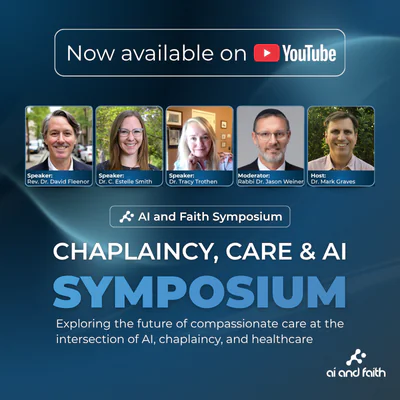
Is AI an assist, an adjunct, or an adversary in Healthcare Chaplaincy? AI and Faith held a Chaplaincy Forum in July.
We had 175 people join us for a day of discussion on the intersection of artificial intelligence, chaplaincy, and healthcare. Through a presentation and moderated discussion, experts from across the field, including certified chaplain David Fleenor, Professor of Ethics Tracy Trothen, and Professor of Computer Science C. Estelle Smith, assessed the challenges and opportunities artificial intelligence offers in this field, exploring if artificial intelligence is good for chaplaincy and how it will affect people. Rabbi Dr. Jason Weiner of the Cedars-Sinai Medical Center moderated the discussion.
AI and Faith Research Director Mark Graves opened the symposium with a grounding in how generative AI works and discussed Magnifica Humanitas, the new papal encyclical whose theology of finitude speaks directly to a profession that accompanies people at their limits. Fleenor then mapped the field along a single continuum, from AI that helps a chaplain do the work to AI that does the work in a chaplain’s place, showing that AI has already arrived at every point along that line and characterizing an empathy paradox: people often rate AI responses as more empathic than human ones, yet still choose the person. In conversation with Weiner, Trothen and Smith took up what this means in practice: grief bots, assistive technologies for aging adults, and online spiritual care communities; a forthcoming expert consensus study that accepts AI for administrative tasks but divides sharply over patient-facing care; the need to build AI literacy into chaplain formation; whether chatbots expand access to care or excuse cutting it; and whether an AI-generated prayer can carry real meaning. The day closed not with a verdict but with a call to remain reflective and intentional — and with Fleenor’s deeper question: not what is AI for, but what is chaplaincy for? All recordings are available on Youtube.
Podcast
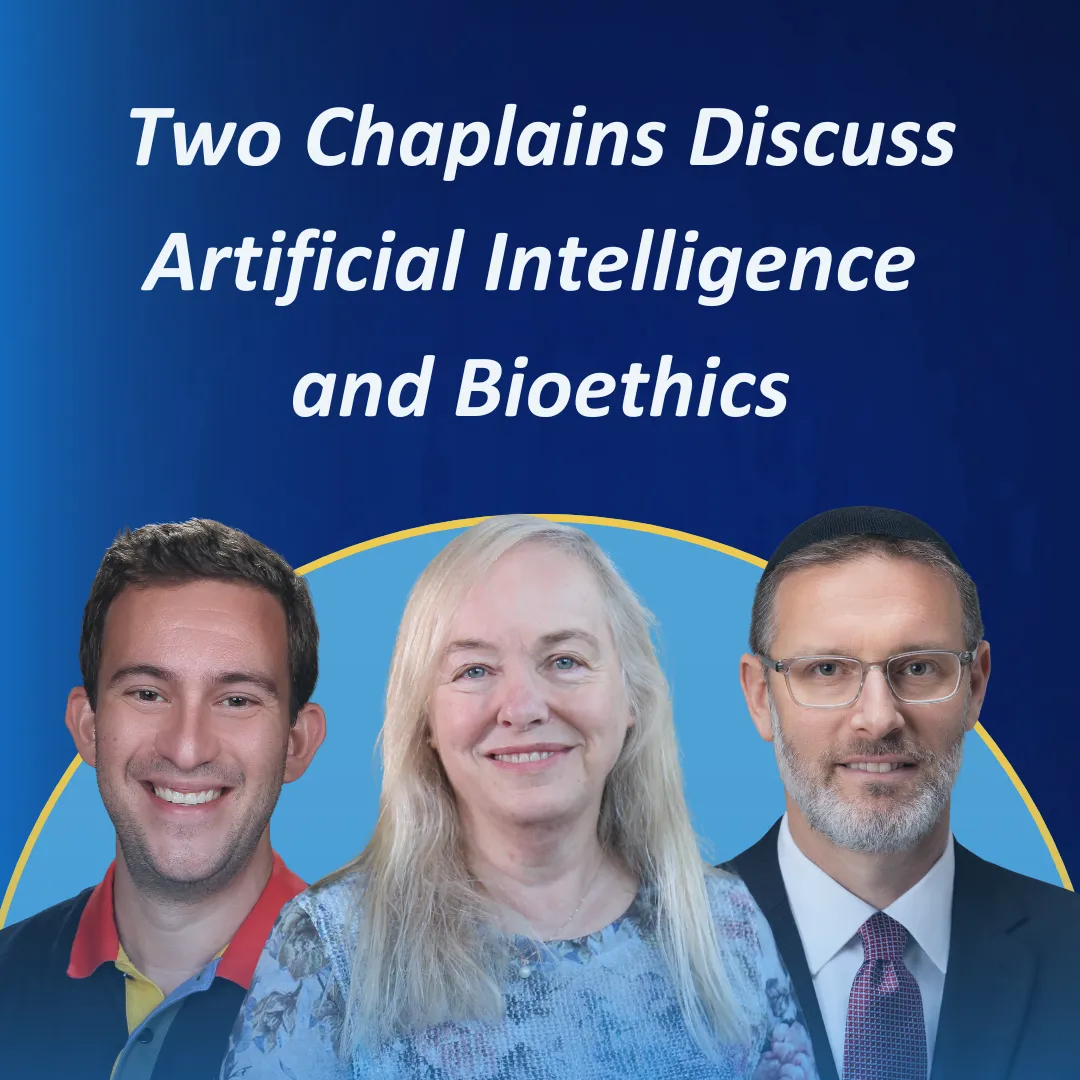
From ethicswashing to outright ethicsbashing, it is tempting to believe the project of public ethics is a waste of energy. Yet, despite the inefficiency of ethics, or perhaps because of it, the significance of public ethics persists, not least for matters of governance. AI and Faith expert Dan Heck considers the Protestant Reformation and the Diet of Worms as an example of clashing public religious ethics and their role in governance.
AI and Faith Articles

A machine can always say yes, instantly, warmly, at no cost to itself. We’re the ones for whom saying yes costs something. And that cost is not a defect in our care. It is the whole of it.

Prompting an AI well is a learned and taught skill. What we say often is not what we mean, particularly in a hospital room. Hank Spaulding responds to Hansen’s article “My Artificial Chaplain” (re-posted last month) to further expound the chaplain’s work of being present. “The most important pastoral response may be not to affirm or correct the bad theology but simply to notice the tears forming while they say it…So many things use language in a hospital room: bodies, silence, tears, the grip of a blanket, a look between spouses, and even the room itself.”
Outside Articles

In this study, researchers asked chaplains to build AI chatbots. In building chatbots, significant findings about chaplains’ perception of AI and the work of chaplaincy emerge. Not only does this study reveal significant differences between chatbots and chaplains, but it also shows how chaplains think about the work of chaplaincy.
Any prayer a bot generates is simultaneously no one’s and everyone’s, the most vacuous and the most intensified representation of human thoughts and desires. So, I could say this prayer is empty of any meaning. I could also argue it’s chock-full of meaning because the communion of saints on earth generated the sentiment.” Candler School of Theology associate professor of practical theology Danielle Tummino Hansen deliberates the significance of personal meaning.